"I had reasoned dis out in my mind;
there was one of two things I had
a right to, liberty, or death; if I could
not have one, I would have de oder;
for no man should take me alive;
I should fight for my liberty as long
as my strength lasted, and when
de time came for me to go, de Lord
would let dem take me."
|
WEAPONS


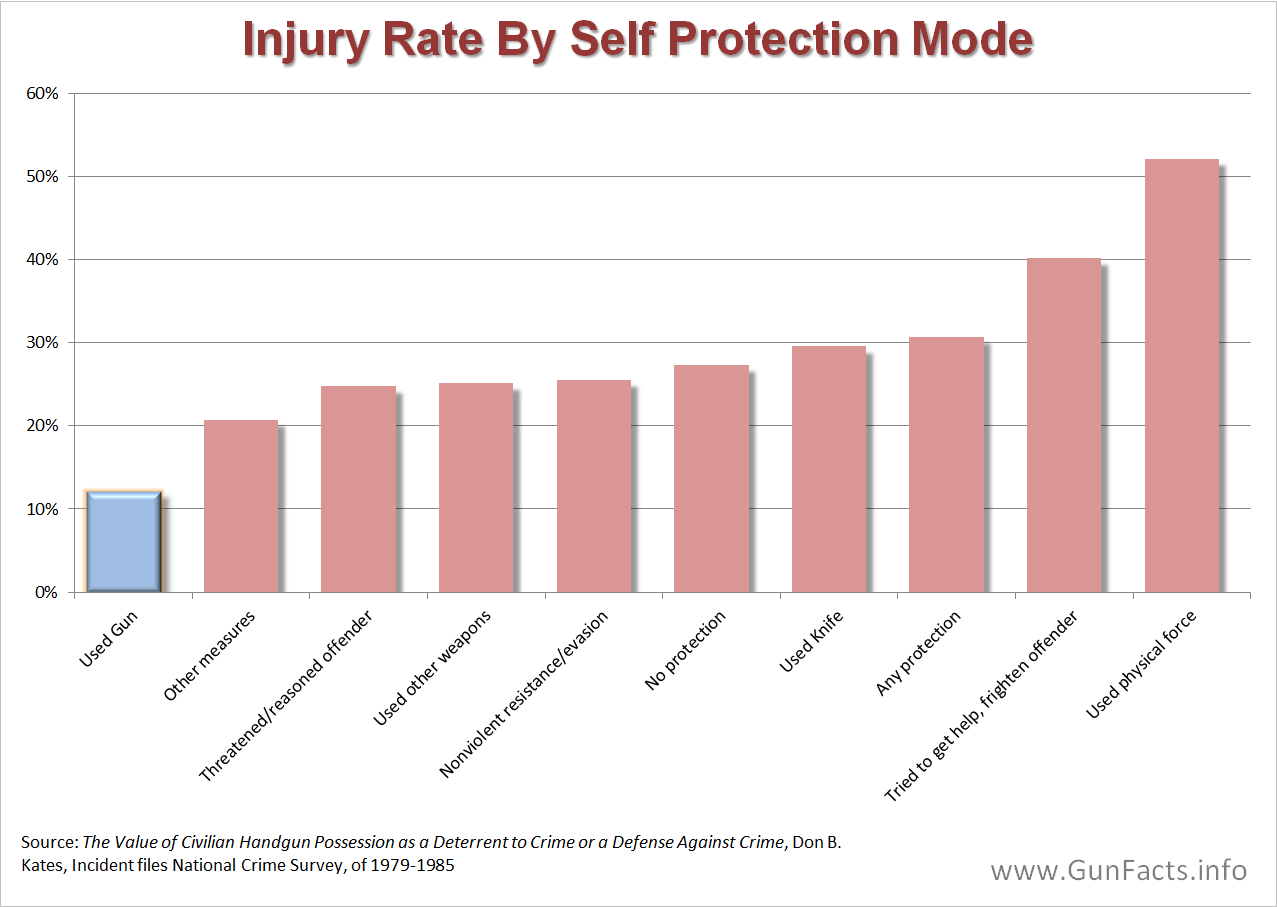
Free adults have a legal right to defend themselves, a legal duty to defend dependents under their care, and a social duty to defend members of society against criminal violence. That said, one must only use force that is proportionate to the threat posed, not excessive force, nor attempt to punish an offender (vigilantism), nor is it your job to capture fleeing offenders which is best left to trained professional unless the offender poses a deadly threat to society such as spree killers or terrorists who attempt to escape after an attack. Firearms are the most effective means of defense against criminals, in large part because most will flee or surrender when confronted by a victim with a gun for fear of being maimed or killed.
Source: Kates, Don B., The Value of Civilian Arms Possession as a Deterrent to Crime or Defense Against Crime (March 25, 1991). American Journal of Criminal Law, 1991.
Return to Index
A flashlight is an essential tool in helping you avoid dangerous situations. They can be used to illuminate darkened spaces that could pose a threat, from an unseen pothole, ditch or street sign post to a potential attacker. They can also be used to dazzle an attacker, giving you time to escape or draw a weapon. Some are also suitable for use as impact weapons if their body is made of high strength aluminium. We recommend Streamlight and SureFire flashlights.
YouTube Video: How To Use A Flashlight For Self Defense
FLASHLIGHT: Wikipedia PDF fact sheet
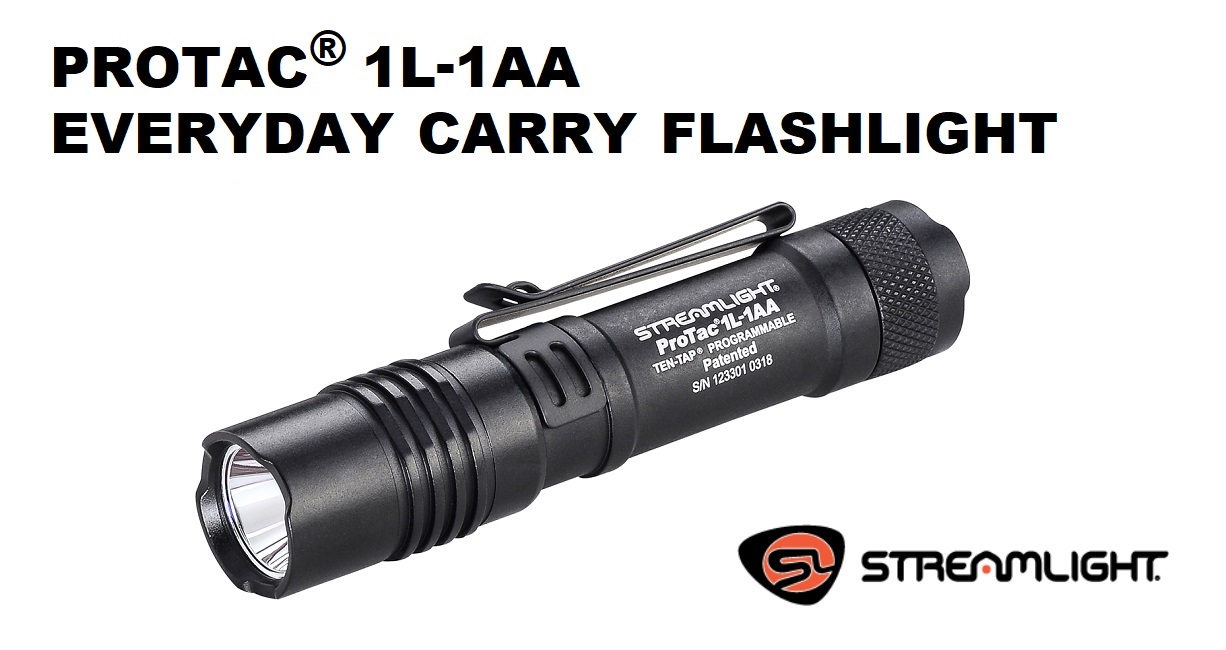
The Streamlight ProTac 1L-1AA ECF uses a single CR123A battery or AA battery (alkaline or lithium). The LED provides two light output levels: a 350-lumen beam (1.5 hours runtime) or strobe (3 hours runtime) and a 40-lumen low-output setting (14 hours runtime) with a single CR123A battery. The AA battery options provide a lower high-output setting. It has three program modes, 1) High/Strobe/Low, 2) High Only, 3) Low/High. A defensive flashlight should lead with high power. Streamlight
Return to Index
Oleoresin capsaicin (OC) pepper spray is safe and very effective on animals and lowly motivated human offenders like drunks and can be carried places that firearms cannot, but are not suitable for use in windy conditions. The user can place a wall of irritant between them and the assailant as they retreat. They are ideal for situations where the use of a firearm is illegal, amount to excessive force, or endanger innocents. We recommend First Defense and SABRE pepper spray.
YouTube Video: Can Pepper Spray Really Stop an Attacker?
PEPPER SPRAY: Wikipedia PDF fact sheet
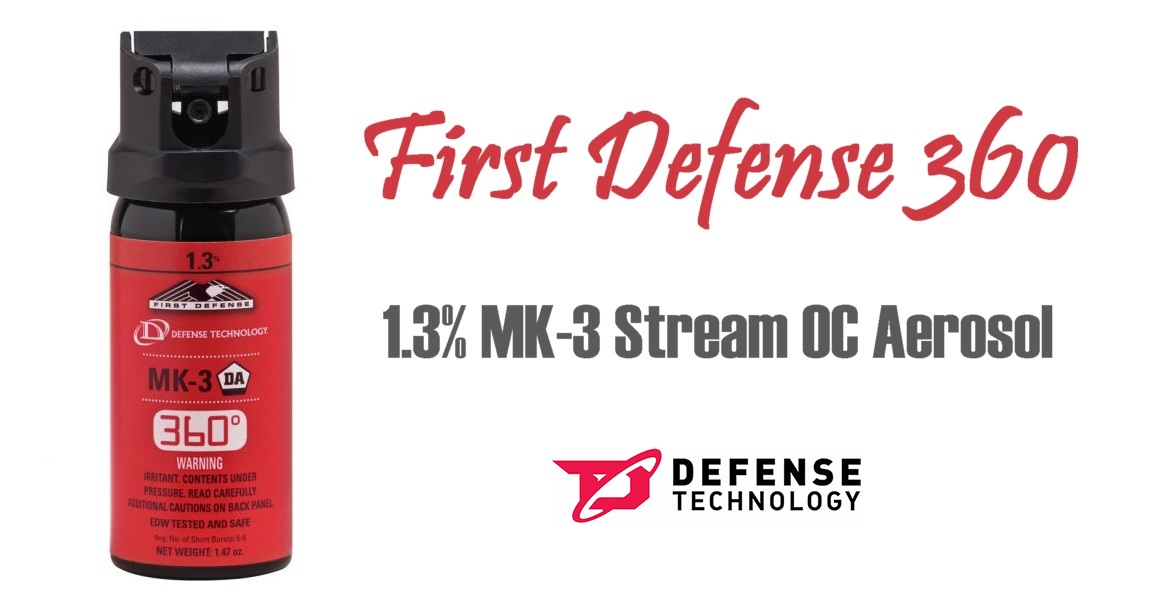
The First Defense 360 1.3% MK-3 Stream OC Aerosol (1.47 oz) canister be discreetly carried in a jacket pocket or fanny pack and will deliver 10-12 short bursts of OC at an effective range of 10-12 ft. This 1.3% MC OC aerosol product features a 360° stream delivery method which allows the aerosol projector to disperse OC from any angle while also providing a target-specific and concentrated stream for greater standoff. An innovative product we highly recommend. Defense Technology
Return to Index
Handguns are more versatile than long guns as they can be discretely carried. They are far easier to keep hold of during a struggle than any long gun and allow you to scoop up a child with one hand and cover your retreat with a gun in the other hand. Self-loading pistols are prone to 'limp wrist' stoppages if not held correctly and are dependent on ammunition quality and spring condition for reliable functioning, and are prone to stoppages if they come into contact with anything while firing, so revolvers are inherently less stoppage prone.
The .38 Special revolver round and 9mm pistol round (also used in some revolvers) have the best balance of stopping power and controllability in small handguns (with the exception of people with low hand strength) and are readily available worldwide. People with hand strength issues are generally better served with pistols with a shorter and lighter trigger pull than revolvers and recoil absorbing reciprocating slides, while .32 ACP chambered pistols like the KelTec P32 and Beretta 3032 Tomcat have substantially less recoil than small .38 Special and 9mm chambered handguns. If you have trouble pulling back the slide of a pistol to load/unload it you can use one of the techniques in the 'Rack the Slide' article by Kathy Jackson.
Long guns are best restricted to defensive use inside a safe room as they not suitable for concealed carry or one handed use (if a hand/arm is injured/disabled) and harder to keep control of during a struggle than a handgun. Manually reloaded pump, lever and bolt action long guns work well for people who have practiced a lot with them so rigorously operating the mechanism to reload the chamber is an automatic reflex, but everyone else is better off with a self-loading or double-barrel long gun. A double-barrel long gun only holds two rounds, but you can fire these two rounds as fast as you can pull the trigger while they are simple, robust, and very reliable.
Many hunters prefer a double-barrel long gun for close range use against dangerous game over a manually reloaded single-barrel magazine fed long gun like a bolt action, pump action or lever action rifle or shotgun as they believe it is too easy to fumble the reload in a high stress situation if the first shot fails to stop a charging animal. Better two shots for sure than just one shot. Casual users of magazine fed bolt action, pump action and lever action long guns are especially prone to 'pilot error' malfunctions in high stress situations. Some hunters prefer self-loading rifles and shotguns, but they require more maintenance than manually operated firearms and (as with pistols) are dependent on ammunition quality and spring condition for reliable functioning.
The 12 gauge shotgun round is best in a long gun as it is very versatile. Twelve gauge buckshot and slug rounds have excellent stopping power, while less-lethal rounds are also available, notably bean bag rounds. Bean bag rounds do not have enough energy to cycle a self-loading action so you will need a manually reloaded shotgun to use them like a pump action or double-barrel shotgun. Reduced power 12 gauge buckshot loads have noticeably reduced recoil, but recoil sensitive people are advised to use a .410 bore shotgun which have very good stopping power with buckshot and slug loads (comparable to a 9mm +P pistol load) but greatly reduced recoil. Less-lethal rubber buckshot loads are available in .410 bore.
A defensive firearm may have features you desire and feel good when handled, but it is always best to test fire them before you buy them as you may find some are unreliable, uncomfortable to fire, or have a characteristic you do not like. It may be possible to modify a firearm to make it more to your liking, such as replacing the grip or fitting a lighter or heavier trigger spring if you find the trigger pull is too heavy or too light. It is very important to become skilled in the use of a defensive firearm. With competency comes confidence. One must obtain professional instruction and practice with your firearm on a regular basis in order to maintain competency.
Ideally new shooters will dry fire their firearm (using Snap Caps to prevent damage to the firing pin) to help master the trigger pull before transitioning to low power training loads, followed by training with the more powerful loads used for defensive use. Dry firing and the use of low power training loads is highly desirable for new shooters who would otherwise have difficulty in learning how to shoot their firearm well. The heavier recoil of defensive loads can cause new shooters to develop a flinch due to a subconscious anticipation of recoil, which can greatly decrease accuracy, thus harming both competence and confidence. A flinch can be a difficult habit to break.
People who are not familiar with firearms and unable to obtain professional training are best served with simple to use firearms. In a handgun that would be a DAO (double-action-only) revolver like the Ruger LCR or S&W Centennial (.38 Special). In a long gun that would be a double-barrel shotgun like the Stoeger Coach Gun (12 gauge or .410 bore). People with low hand strength who have difficulty using the long, heavy trigger pull of said revolvers are best served with a simple striker fired pistol like the Glock 43 or Walther PPS M2 (9x19mm) if they can readily operate the slide to load/unload them. If not, the Beretta 3032 Tomcat (.32 ACP) is best as it has a tip-up barrel feature that allows them to load/unload it without operating the slide.
In closing, the great majority of criminals will flee when they come across a victim with a gun. That said, some criminals can sense if an armed victim is bluffing, so if you are not willing to shoot an attacker you should not use a gun for defensive use.
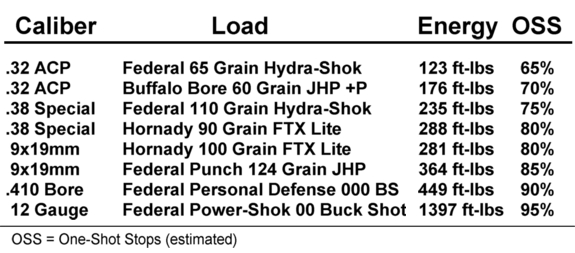
Estimates derived from an analysis of the stopping power statistics in Street Stoppers: The Latest Handgun Stopping Power Street Results by Evan P. Marshall and Edwin J. Sanow (Paladin Press, 1996).
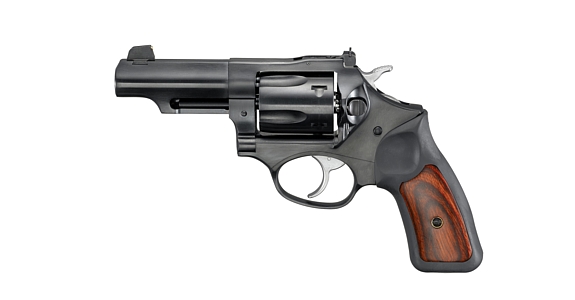
COMPACT REVOLVER: Ruger SP101 [ .38 Special ] PDF info sheet PDF Manual
This .38 Special chambered SP101 (5-shot) is a superb defensive handgun due to its combination of stopping power, reliability and compactness. Although its weight and external hammer make it unsuited to pocket carry, its weight and robust construction make it an excellent choice for use with high performance loads. We recommend the Hornady 38 Special 90 Grain FTX Critical Defense Lite load and, for the recoil sensitive, the Federal Personal Defense 38 Special 110 Grain Hydra-Shok Low Recoil load.
YouTube Review: Ruger SP101
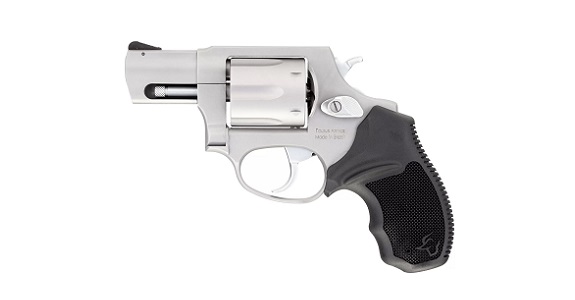
COMPACT REVOLVER: Taurus Model 856 [ .38 Special ] PDF info sheet PDF Manual
This .38 Special chambered 856 (6-shot) is a superb defensive handgun due to its combination of stopping power, reliability and compactness. Although its weight and external hammer make it unsuited to pocket carry, its weight and robust construction make it an excellent choice for use with high performance loads. We recommend the Hornady 38 Special 90 Grain FTX Critical Defense Lite load and, for the recoil sensitive, the Federal Personal Defense 38 Special 110 Grain Hydra-Shok Low Recoil load.
YouTube Review: Taurus Model 856 .38 Special Revolver Shooting Review
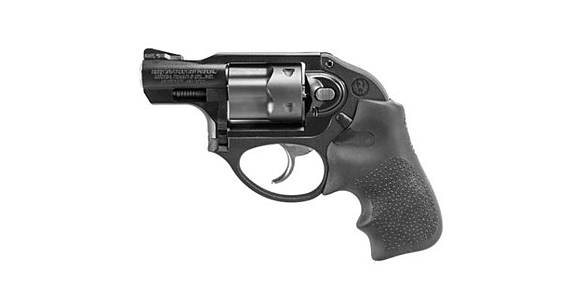
POCKET REVOLVER: Ruger LCR [ .38 Special ] PDF info sheet PDF Manual
The .38 Special chambered LCR (5-shot) is ideal for people who want a lightweight revolver suited to pocket carry and can manage the trigger pull of DAO revolvers like this (heavier than most pistols). It will fire from inside a pocket thanks to the internal hammer. We recommend the Hornady 38 Special 90 Grain FTX Critical Defense Lite load and, for the recoil sensitive, the Federal Personal Defense 38 Special 110 Grain Hydra-Shok Low Recoil load.
YouTube Review: S&W J-Frame vs Ruger LCR
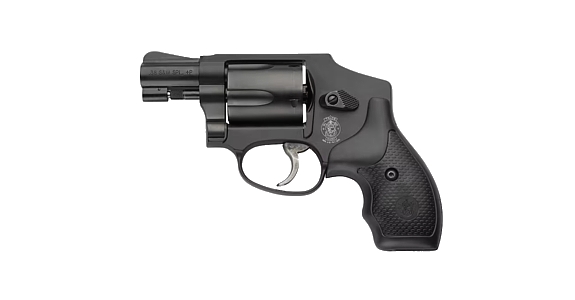
POCKET REVOLVER: S&W Model 442 [ .38 Special ] PDF info sheet PDF manual
The .38 Special chambered Model 442 (5-shot) is ideal for people who want a lightweight revolver suited to pocket carry and can manage the trigger pull of DAO revolvers like this (heavier than most pistols). It will fire from inside a pocket thanks to the internal hammer. We recommend the Hornady 38 Special 90 Grain FTX Critical Defense Lite load and, for the recoil sensitive, the Federal Personal Defense 38 Special 110 Grain Hydra-Shok Low Recoil load.
YouTube Review: S&W J-Frame vs Ruger LCR
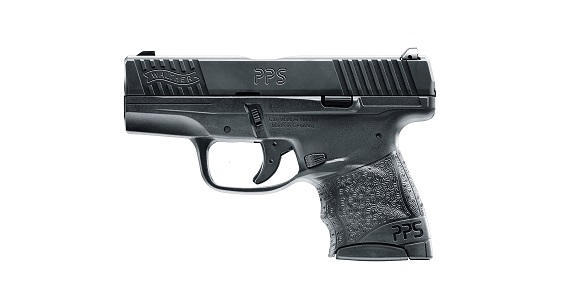
SUBCOMPACT PISTOL: Walther PPS M2 [ 9x19mm ] PDF info sheet PDF manual
The 9mm chambered PPS M2 (6, 7 and 8 round magazines) has proven to be very reliable. It comes with a striker cocking indicator pin at the rear of the slide that can be used as a striker control device to help prevent an accidental discharge when holstering or unholstering it by placing your firing hand's thumb firmly on the rear of the slide. We recommend the Federal Personal Defense 9mm 124 Grain Punch load and, for the recoil sensitive, the Hornady 9mm Luger 100 Grain FTX Critical Defense Lite load.
YouTube Review: Glock 43 vs Walther PPS M2 Safety Recall: PPS M2 Recall
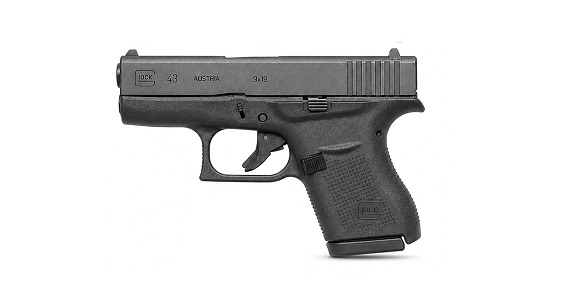
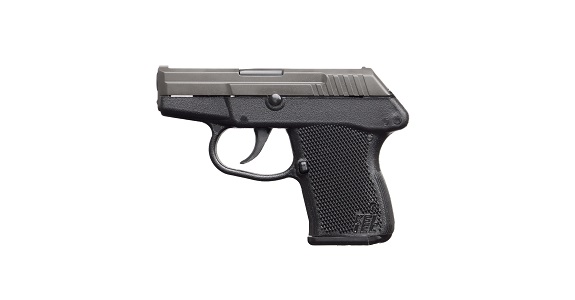
POCKET PISTOL: KelTec P32 [ .32 ACP ] PDF info sheet PDF Manual
The .32 ACP chambered P32 (7 round magazine) has proven to be reliable. This DAO pistol has much lighter recoil than small 9mm and .38 Special chambered handguns so is very well suited to people with weak hand strength. We recommend the Buffalo Bore 32 ACP +P 60 Grain JHP (Barnes TAC-XP) load and, for the recoil sensitive, the Federal Personal Defense 32 Auto 65 Grain Hydra-Shok load.
YouTube Review: Everyone Copied The KelTec P32. Nobody Got It Right
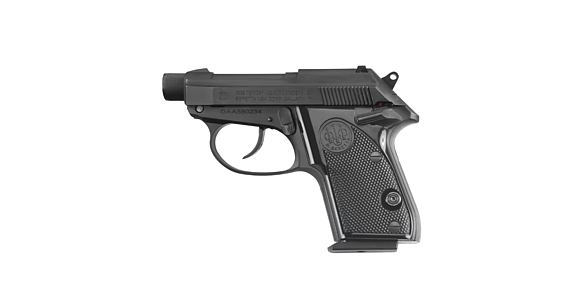
POCKET PISTOL: Beretta 3032 Tomcat [ .32 ACP ] PDF info sheet PDF manual
The .32 ACP chambered Tomcat (7 round magazine) has proven to be reliable. This DA pistol has much lighter recoil than small 9mm and .38 Special chambered handguns so is very well suited to people with weak hand strength. It can be loaded by placing a round directly into the chamber without having to pull the slide back. We recommend the Federal Personal Defense 32 Auto 65 Grain Hydra-Shok load.
YouTube Review: Beretta 3032 Tomcat
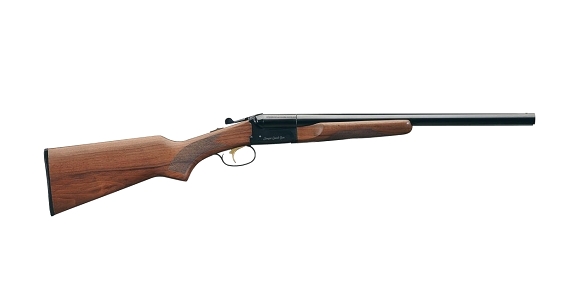
DOUBLE-BARREL SHOTGUN: Stoeger Coach Gun [ 12 Gauge ] PDF info sheet PDF manual
This double-barrel shotgun is simple to operate and very reliable. Despite only holding two rounds, some people prefer double-barrel long guns to magazine fed long guns like self-loading, pump and lever action long guns as there is less to go wrong, thus are more reliable. It is also available in .410 bore. We recommend reduced recoil '00' buckshot loads and less-lethal bean bag rounds for thin walled homes.
YouTube Review: Stoeger Coach Gun
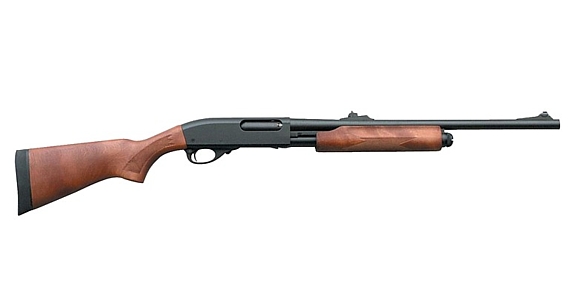
PUMP ACTION SHOTGUN: Remington 870 [ 12 Gauge ] PDF info sheet PDF manual
Pump action shotguns like the 870 are the most versatile defensive long guns. The barrel can be quickly removed to facilitate discreet transportation. It can also be readily fitted with shorter or longer barrels and a folding stock like those produced by Choate Machine & Tool. It is also available in .410 bore. We recommend reduced recoil '00' buckshot loads and less-lethal bean bag rounds for thin walled homes.
YouTube Review: Mossberg 590 vs Remington 870
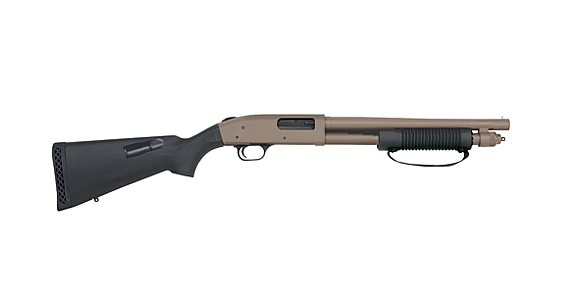
PUMP ACTION SHOTGUN: Mossberg 590 [ 12 Gauge ] PDF info sheet PDF manual
Pump action shotguns like the 590 are the most versatile defensive long guns. The 590 SBS (short barrel shotgun) has a 14" barrel, while the pistol type Shockwave variant will accept any 500/590 series buttstock (as is the one pictured above) or arm brace. It is also available in .410 bore. We recommend reduced recoil '00' buckshot loads and less-lethal bean bag rounds for thin walled homes.
YouTube Review: Mossberg 590 vs Remington 870
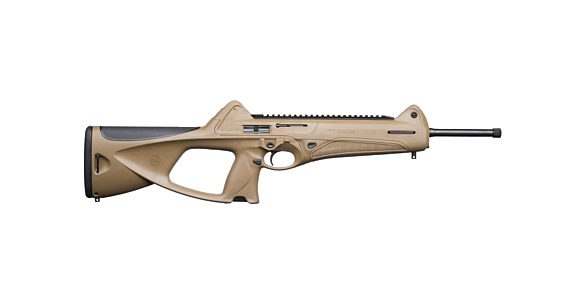
SELF-LOADING RIFLE: Beretta Cx4 Storm [ 9x19mm ] PDF info sheet PDF manual
The Beretta Cx4 Storm is the best self-loading defensive rifle. It can be quickly and easily field stripped for cleaning and discreet transportation. It is far better suited to people who are frail or have a disability than 12 gauge shotguns as it has far less recoil. It uses Beretta pistol magazines (Px4 or 92/8000 series with an adapter). We recommend the Federal Personal Defense 9mm 124 Grain Punch load.
YouTube Review: Beretta CX4 Storm
Return to Index
AR500 Armor
Affordable body armor, plate carriers and related accessories. We like their Level III Lightweight UHMWPE Body Armor (10"x12" polyethylene plates that weigh 2.7 lbs) which provide protection from most threats and are much lighter than the steel equivalent or Level IV UHMWPE plates. They are multi-hit capable and have positive buoyancy. AR500 Armor
BLUEGUNS
These non-functional training guns from Ring's Manufacturing are ideal for a range of training uses, from drawing and holstering handguns to simulating tactical scenarios. The BLUEGUNS range of inert training guns are recommended due to their extensive range of handguns and long guns, and come in a range of colors. Ring's Manufacturing
GunVault
This company makes a wide range of fast opening steel safes. The MiniVault (one handgun) and MultiVault (four handguns) have holes in their base so they can be bolted to the floor. The MiniVault can also be temporarily secured via a detachable steel cable. They open via a 9V battery powered 'No Eyes' keypad or a backup key. GunVault Inc.
HandALL Grip Sleeve
These slip-on rubber grips can be fitted to a wide range of handguns to make them better suited to people with larger hands or provide a more secure grip. Slip-on grips like this are especially well suited to self-loading pistols which have non-removable grips. Hogue Inc.
3M PELTOR SportTac Headset
These 3M brand electronic ear muffs protect the ears from gunshots but allow users to have a conversation. They can also intensify sounds like an intruder walking on carpet, and are bi-aural so you can tell what direction a sound came from. Ideal for home defense and the shooting range. They use two AAA batteries (600 hour battery life). PDF spec sheet 3M Company
Secret Service Grips
The smooth surface of this rosewood revolver grip allows a hand to easily slide around and grasp it even when in an enclosed space like a pocket or held tightly against the body in an IWB or bellyband style holster (rubber grips tend to untuck shirts). They are ergonomic so provide good recoil control but are not as comfortable to use as rubber grips. Eagle Grips
Stealth Pac-2
The leather Stealth Pac-2 waistpack holster is far more stylish than the nylon variety and much quieter to open (zip) than brands that use Velcro. The rear key-locking CCW pocket contains an adjustable holster. One should not carry a weapon in a handbag or laptop bag due to the difficulty in quickly accessing it and poor security (a prime target for thieves). Coronado Leather
TLR-6 Gun Light
The compact Streamlight TLR-6 Gun Light is available for a variety of handguns. They produce 100 lumens of light, feature ambidextrous push-button switches on either side of the housing for easy operation, and are available with or without a red aiming laser. These gun lights use two CR-1/3N Lithium batteries and have a one hour run time. Streamlight
WeaponLight
The SureFire WeaponLight range of weapon mounted tactical gun lights that are available for a variety of firearms (dedicated and universal rail mounted lights) including self-loading rifles, handguns, and shotguns including the pump action Remington 870 and Mossberg 590. We favor the smallest possible light suitable for the application in order to keep weight and bulk to a minimum. SureFire.
Return to Index
Rule 1: All guns are always loaded.
Rule one doesn't mean that all guns are in fact loaded, only that all guns are treated and handled as if loaded. If you wouldn't point a loaded gun at a friend, then don't point an unloaded gun at them. If you wouldn't leave a loaded gun unattended where a child could get at it, then don't do so with an unloaded gun.
Rule 2: Never let the muzzle cover anything you're not willing to destroy.
Muzzle control is rule two. What an ejection seat is to a jet fighter pilot or a life raft to a sailor, so muzzle control is to a shooter. It's the last line of defense, the one thing that can save a life when everything else goes wrong. A gun can discharge for a number of reasons, but if the muzzle is pointed in a safe direction nobody will be hurt.
Rule 3: Keep your finger off the trigger until ready to shoot.
The purpose of the trigger is to fire the gun, not rest your finger. If your finger is on the trigger and you trip or are startled the gun may go off. If you are holding an offender at gunpoint you will probably have your finger on the trigger (survival instinct), which is why guns with a long, heavy trigger pull are best for 'threat-management'.
Rule 4: Be sure of your target.
Know what you are shooting at, and what is behind it. Innocents may be behind the assailant, so it is your responsibility to aim where the bullet is unlikely to pass through the offender. In darkened houses family members and friends have been mistaken for intruders and shot, so always identify your target before firing.
 NRA Gun Safety Rules NRA Gun Safety Rules
Return to Index
Quick Education
Knowledge is power. Start with Massad Ayoob's book: In the Gravest Extreme. Then go to a legal library and tell the librarian you want to see everything in the statute books about guns, assault, homicide and self-defense. The more knowledgeable you are, the less likely you are to make a tragic mistake.
Deadly Force
One must only use lethal force to stop an immediate and unavoidable deadly threat to an innocent person. If an offender ceases to pose a threat you cannot shoot him. There are three key factors to determining whether or not lethal force is justified. Ability: Did the offender have the means to kill or seriously injure the victim. The weapon may be a gun, knife, baseball bat, or greatly superior strength or ability (e.g., a karate expert). Proximity: Was the offender close enough to the victim to use the weapon immediately. Intent: Did the offender display his intent to kill or seriously injure the victim. This can take the form of a verbal threat, body language or other actions that indicate his intent.
Escape Hatch
There is another factor that needs to be considered. Was there any way you could have reasonably extricated yourself and other innocents from the situation without resorting to lethal force?
In public some states allow you to defend yourself without retreat if attacked any place you have a right to be. Others have a "retreat requirement". This last requirement is often misunderstood. It does not say you must retreat or die. One typical law states that retreat is required before resorting to lethal force if the retreat can be accomplished with complete safety to yourself and others. Shooting an offender when you could have safely escaped without doing so may make said shooting appear unreasonable.
Castle Doctrine
An exception to the retreat requirement comes from English common law. The doctrine states, "A man's home is his castle, and attacked therein, he is not required to retreat". Do not, however, assume that because your state has a law affirming your right to defend yourself in your home that you can shoot any intruder, which is not the case. Even in your own home retreat is an excellent idea, as it indicates that your use of lethal force was a last resort. This is just one more reason why the logical thing to do when there is an intrusion is to scoop up the whole family and get them into the safe room. If the intruder smashes his way into the safe room it is clear that he posed a genuine threat to your family.
The Eternal Yardstick
Your actions will be judged by another doctrine derived from English common law, namely the 'Reasonable Man Doctrine'. The judge will tell the jury: "You must ask yourself if the firing of the gun by the defendant was the act of a reasonable and prudent person in the same situation, who knew what the defendant knew. If you believe a reasonable and prudent person in that situation knowing what the defendant knew would not have fired, then you should find the defendant guilty of manslaughter". "If, however, you believe that a reasonable and prudent person, in the same situation and knowing what the defendant knew, would have shot the deceased, you must find the defendant not guilty."
Lethal Force Commandments
1. Avoid all fights
Whenever you go armed you must go to extremes to avoid physical conflict.
2. Lethal force is a last resort.
Only use a lethal weapon as a last resort to prevent an immediate, unavoidable deadly threat to innocents.
3. Don't shoot fleeing criminals.
If an offender flees he's no longer a threat to you. Capturing offenders is a job best left to the police.
4. Never fire 'warning' shots.
A warning shot can kill an innocent bystander. You may be charged with reckless behavior or attempted murder.
5. Never draw your weapon unless you are fully prepared to use it.
Criminals can sense if you are bluffing from body language and tone of voice.
6. Be discreet in concealing a weapon.
A gun must be kept out of sight until needed. Revealing a gun unnecessarily will attract police attention.
7. Shoot to stop, not to wound.
A wounded assailant can kill you. Never use deadly force unless justified in killing an assailant.
8. Your defense weapon should be legally owned and carried.
An illegally owned or carried gun can indicate a reckless disregard for the law.
9. Maintain your skills and knowledge.
Practice with your gun regularly (join a gun club). Keep up to date on the law relating to guns and self-defense.
10. Be responsible.
Never endanger innocents. Stay at the scene of a shooting to wait for police (if safe to do so).
Return to Index
Home
If you know an intruder has entered your home, or is about to enter it, the best thing to do is get family members into the safe room and call the police. Looking for the intruder is a bad idea as he will probably hear you coming and ambush you. A 'safe room' is simply a main bedroom that has been fitted with a reinforced door and frame with a deadbolt lock, windows covered by bars (that can be quickly released from the inside if there is a fire) and/or fitted with reinforced glass (the bullet resistant variety or normal glass covered with window film), a secure telephone line (a land line should use an underground cable and have no extensions), a gun and flashlight. The perimeter would ideally be protected by a high fence, sensor lights and a dog, with no vegetation near entrances or windows. An alarm (connected to a private security company) that will warn you of an intruder breaking in is highly desirable, one that can be triggered manually via panic buttons located by entrances and in bedrooms even when the door/window sensors are deactivated.
You cannot call the police every time you hear an unusual sound, so if you decide to investigate tell your partner to call police if he or she hears a scuffle or shout before you leave the bedroom. Be dressed and have a flashlight and gun (ideally a handgun). Move slowly along the edge of hallways and rooms (floors are less likely to squeak as they are better supported there), only using the flashlight briefly when necessary to illuminate/clear a room or hallway (leaving it on makes you an easy target). If you realize there is an intruder who poses an imminent and unavoidable deadly threat shoot him until he is no longer a threat (a potentially armed adult intruder poses an imminent deadly threat to a child in a nearby bedroom). If the intruder has a gun don't give a warning like "don't move" as this will give him time to spin and shoot you before you can react - shoot until he is no longer a threat even if this means shooting him in the back. If he does not pose an imminent deadly threat to anyone retreat to the safe room and call police.
Street
On the street it is important to have situational awareness, best achieved by via Jeff Cooper's awareness color code. Condition 'white' is a state of inattentiveness when in a secure environment like your home. The following three conditions are for everywhere else.
1. Yellow (ready): You are aware of your environment.
2. Orange (set): You see a potential threat and keep it under observation.
3. Red (go): A threat materializes so you take appropriate action.
In a potentially dangerous situation it is best to have your hand on your weapon. The best place to carry it is a pocket so you can discreetly have your hand on it. If an imminent deadly threat you cannot avoid materializes use lethal force. If the deadly threat is not imminent shout "piss off" and leave the area while keeping your weapon in the ready position (pointed at the ground between you and the offender). In a dangerous situation where you don't have a gun, or lethal force is not justified, a can of pepper spray is recommended, as is becoming highly proficient with half-a-dozen essential hand-to-hand combat skills (Aikido and Ju-Jitsu are the best martial arts).
Personal Defense Principles
Jeff Cooper wrote a book called Principles of Personal Defense, from which his awareness color code was extracted. His principles are taught to many police cadets and soldiers.
1. Alertness: Don't be surprised. Use the awareness color code.
2. Decisiveness: Have a plan of action thought out beforehand.
3. Aggressiveness: Be willing to attack the attacker.
4. Speed: Action beats reaction. Don't waste time.
5. Coolness: Gun sports are great practice for gun defense.
6. Ruthlessness: Be willing to injure or kill the attacker.
7. Surprise: Most criminals don't expect a counter-attack.
'What if?' game
It is a good idea to think about what you would do in various situations by playing the 'what if?' game. It is often too late to think through a problem when faced with a deadly threat, as the cocktail of chemicals released into he bloodstream primes the body for action ('fight or flight' reflex), not analyzing situations. Trying to evaluate the pros and cons of various courses of action in such a situation can cause a lethal delay. Most violent criminals (consciously or unconsciously) want to harm their victims, so it is best to run or fight when practical. Getting into a kidnapper's vehicle or letting a criminal tie you up is especially dangerous as it will likely result in your death. Fighting a rapist is more likely to result in an injury, but victims are much less likely to be raped. A good tactic with robbers is to throw a dummy purse/wallet on the ground in one direction and run in the other direction while shouting for help.
Return to Index
Be Prepared
If forced to defend yourself you will want to have three things in place beforehand.
1. Money
If an attacker dies and you are charged bond can run to $100,000 or more. Give your partner power of attorney so he or she can post bond using property, since most of us do not have that much cash lying around in reserve.
2. Spare weapon
If the incident has left a vengeful perpetrator out and about, you are at risk. However, if you used a weapon it has just gone into the police evidence room! Solution? Have a spare weapon. It should be identical to your defense weapon, and be capable of being used by either hand - in case your strong hand or arm is injured.
3. Lawyer
Find the best self-defense lawyer around. If you don't have a lawyer now, contact a lawyer referral service in your area. The lawyer should be paid by you. If a co-defendant hired your lawyer (e.g., insurance company) the lawyer will try to shift the blame off their paymaster and onto you! When you get the chance to talk with your lawyer after a shooting, tell him or her everything, every little detail. Anything you say to your lawyer cannot be used against you.
Things to Avoid
Sometimes it is the things you don't do that can help prevent an unjust criminal conviction.
1. Don't flee or lie.
Flight equals guilt. Once a liar, always a liar.
2. Don't alter the evidence.
Modern forensic techniques allow police investigators to recreate a crime scene with 90% accuracy.
3. Don't try to explain your actions immediately.
Tunnel vision and auditory exclusion make you the world's worst witness right after a shooting.
4. Don't help opposing counsel.
Failing to point out critical evidence, not reporting harassment, talking to the media, getting angry, etc., can hurt you.
Postvention
Here are the things you should do after a self-defense incident, in the order they should be done.
1. Call the ambulance.
If someone is seriously injured dial the emergency number and ask the operator for the ambulance service. Say briefly what happened (e.g., "A person has been shot and needs medical assistance.") and where you are. Give no details.
2. Protect the scene.
Do not let anyone near the crime scene. Don't touch anything at the crime scene. An altered crime scene will be detected, and this will cast suspicion on you. If you can't protect the crime scene or are compelled to leave for safety reasons (hostile crowd), put the assailants weapon into a paper or plastic bag - do not wrap it in cloth as it destroys fingerprints. Turn the weapon over to your lawyer (or police if you do not have a lawyer - get a receipt).
3. Contact your lawyer.
Call your lawyer and briefly explain what happened. Have him or her meet you at the scene.
4. Call the police.
You (or your lawyer) dial the emergency number and ask the operator for the police. Tell the police there has been a shooting and to send a patrol. Say who and where you are. Also give them a description of yourself so you won't be mistaken for a suspect. Discuss no details of the incident.
5. Get your weapon out of sight.
If the danger has passed, put your weapon away. Whatever you do, don't turn toward police with a gun in your hand. If you're holding a suspect at gunpoint when police arrive, immediately yell "don't shoot". Then, tell them who you are. NEVER allow your gun to point at police. Police cannot be sure who the good guy is so they'll point their guns at the "person with a gun". Obey every command. Make no sudden moves. Keep your hands in the open.
6. Statement.
If you have just injured or killed an attacker it is important that you only say two things at the scene of the shooting.
a) Establish dynamic of what happened.
b) Point out critical evidence.
What should be said is something like - "Officer, I am the complainant. That man attacked me. His weapon fell into that gutter. That person is a witness. I will fully co-operate with your investigation as soon as I have been able to consult with my lawyer". THEN SHUT UP!
Police
The police do not work for you, that's your lawyer's job. More than 97% of police suspects are guilty of a crime and lie to police, so police assume suspects are guilty of something and try to manipulate them into saying things that will hurt them in court. So beware of false sympathy from police after you put their latest client on the floor, surrounded by a chalk outline. It is advisable to wait at least 24 hours to come down from the extreme stress of a shooting before undergoing the police interrogation. Have your lawyer present and make sure it is video taped.
Court
If you are prosecuted for assaulting someone with a weapon you will have two main questions to answer.
1. Why did you assault the person?
2. Why did you have the weapon?
Unless you have very good answers to these questions you are fighting an uphill battle. People who own weapons may appear to have violent personalities unless they have a good reason for possessing them.
Jury Trial
Never waive your right to a jury trial. A judge is less likely to be sympathetic and may be overly friendly with the prosecution. A jury gives you 12 chances of freedom.
Paper Trail
By reporting all threats, instances of harassment, applying for a restraining order, etc., you are seen to be using all non-violent means to stop a threat. If you are later forced to shoot an offender who has been stalking or threatening you, you can then present evidence that you had reason to fear for your life prior to the shooting. If you shoot someone who has allegedly been stalking you the police prosecutor will ask why you never reported it. The prosecutor will tell the jury: "The truth of the matter is that you shot the victim on the spur of the moment during an argument and made up a story about being stalked to con the jury into thinking you were the victim!"
Civil Suit
Expect to be sued by the criminal (or his estate) if you have any money, even if not criminally charged. In a criminal court the onus is on the state to prove the defendant guilty beyond a "reasonable doubt" (95% probability of guilt). In a civil court you will be judged on what is called the "balance of probabilities" - the jury is instructed to find you guilty if more than 50% of the evidence suggests your guilt.
Media
Never talk to the media even if you feel compelled to tell people what happened (a condition called 'logorrhea') - murder sells more air-time and newspapers than justifiable homicide. Editing of an interview can make the innocent look guilty. Tunnel vision, auditory exclusion and cognitive dissonance will effect statements you make right after a shooting. Leaving stuff out or putting events in the wrong order can hurt you in court.
Mental Health
Your mental health may suffer if you are forced to kill someone. Some experience nightmares, insomnia, depression, social withdrawal, appetite disturbances, flashbacks and sexual dysfunction. Some will see you as a killer, so expect some condemnation and harassment. Do not expect to be congratulated for maiming or killing someone. The good news is that it will not last. Get on with your life and the trauma will fade away.
Final Word
The preceding may seem onerous but most people involved in genuine self-defense incidents are never charged, let alone convicted of a crime. Better judged by 12 than carried by six.
Return to Index
1. Guns are not useful for defense.
Using incident files from the US National Crime Survey, Gary Kleck found victims with guns are far less likely to be attacked/injured in assault/robbery incidents than people without guns (Point Blank: Guns and Violence in America, Aldine de Gruyter Press, 1991). A study covering a 15 year period (1977-92) by John Lott and David Mustard found that American states which adopted Florida type right-to-carry laws had (on average) an 8.5% fall in their murder rate (Crime, Deterrence, and Right-to-Carry Concealed Handguns, University of Chicago, 1996) - the results are examined in Lott's subsequent book, More Guns, Less Crime (University of Chicago Press, 1998). Even an anti-gun sponsored survey (Hart Survey, Point Blank) showed that 783,000 Americans used guns defensively each year (criminals flee or surrender more than 95% of the time without a shot being fired). If guns were banned law-abiding victims would be greatly disadvantaged compared to gun toting felons who can readily obtain guns on the black market and could, in most cases, make do with knives, screwdrivers, machetes or clubs if guns magically disappeared, tools that are not practical defensive weapons for many female, elderly, injured, sick, disabled or outnumbered victims.
2. Widespread gun ownership increases the murder rate.
Nations with high gun ownership levels naturally have higher gun death rates than nations with fewer guns, but widespread gun ownership suppresses the overall murder rate, while restricting guns does not reduce the suicide rate due to substitution. The US murder rate in 2013 was half what it was in 1993, in part because most states adopted handgun carry permit laws during that period, as John Lott's seminal work on gun defense predicted (More Guns, Less Crime). Anti-gun groups asserted that the massive increase in CCW permit holders in the US (now over 10 million) would lead to anarchy as a result of "deranged gun fetishists running amok". A study published in the Harvard Journal of Law & Public Policy (Would Banning Firearms Reduce Murder and Suicide? A Review of International and Some Domestic Evidence, Don B. Gates and Gary Mauser, Volume 30, Number 2 - Spring 2007) found that as gun ownership increases the overall murder rate and suicide rate decrease. Seems that guns provide some vulnerable crime victims with a sense of security that decreases the incidence of suicide among such people.
3. Most murderers are ordinary people who kill in a moment of anger only because a gun is available.
Studies on homicide show that the overwhelming majority of murderers are people with life long histories of violence, sometimes irrational, sometimes acquisitive. The typical US murderer has a prior criminal history averaging at least six years, with four felony arrests. He is also likely to be a substance abuser with a record of traffic and/or gun accidents. Indeed, even people who accidentally kill with guns tend to have similar felony records and histories of substance abuse, car accidents and gun accidents. In short, they are an aberrant minority, characterized by a consistent indifference to human life, including their own - not the average gun owner.
4. Gun owning families are at a high risk of accidental death or injury.
Gun accidents are very rare relative to the numbers exposed and comprise a small fraction of all gun deaths. Despite an estimated six million guns in Australian homes, about 60 times more people die in vehicle accidents each year than die in gun accidents (20 deaths vs. 1,200 deaths). Many of these accidental deaths are actually misreported gun suicides. Gun restrictions have no lasting effect on the overall suicide rate due to substitution. Many activities have much higher accidental death rates than gun ownership but provide no protection against violent criminals. Gun accidents are largely confined to a reckless subset of the population, people with criminal histories, alcoholics and those with personality disorders - not the average gun owner. Likewise, child gun accident deaths (very rare) are usually a result of gross negligence on the part of reckless parents who have little regard for the safety of their children or the law.
5. A criminal would take a gun off me.
Anti-gun groups assert that people who attempt to use guns for defensive use will have the gun taken away from them by an offender. Kleck identified crime incidents (using US National Crime Survey data) in which the crime victim used a gun for self-protection and lost a gun to an offender (Point Blank). At most, one percent of civilian defensive gun uses resulted in the offender taking a gun away from a victim. If you believe an assailant is about to gain control of your gun during a struggle you are justified in shooting them with it as you must assume they will use it to kill you. If the assailant is clearly stronger than the victim, or outnumbered, the victim should shoot them before they get their hands on the gun even if it is fitted with a safety device (an offender might know how to overcome it).
6. I'll be criminally charged and sued for damages if I shoot an attacker.
You have the right to defend yourself. Don't be frightened of being charged with a crime or civil litigation. So long as you know the law and do the right thing (e.g., don't flee the scene) it is very unlikely you will be charged with a criminal offence or successfully sued in civil court. If you use force, the force must be used strictly for defensive use, reasonably proportionate to the threat, and not as a means to 'punish' your attacker (vigilantism). There is always a chance you could be criminally charged or sued, but would you prefer to be judged by 12 or carried by six? If it really is a matter of life and death (for you or a loved one) the answer should be easy.
Return to Index
. . . . . . . . . . . . . . . . . . . . . . . . . . . . . . . . .
|